Total: Rs. 0.00
Taxes and shipping calculated at checkout
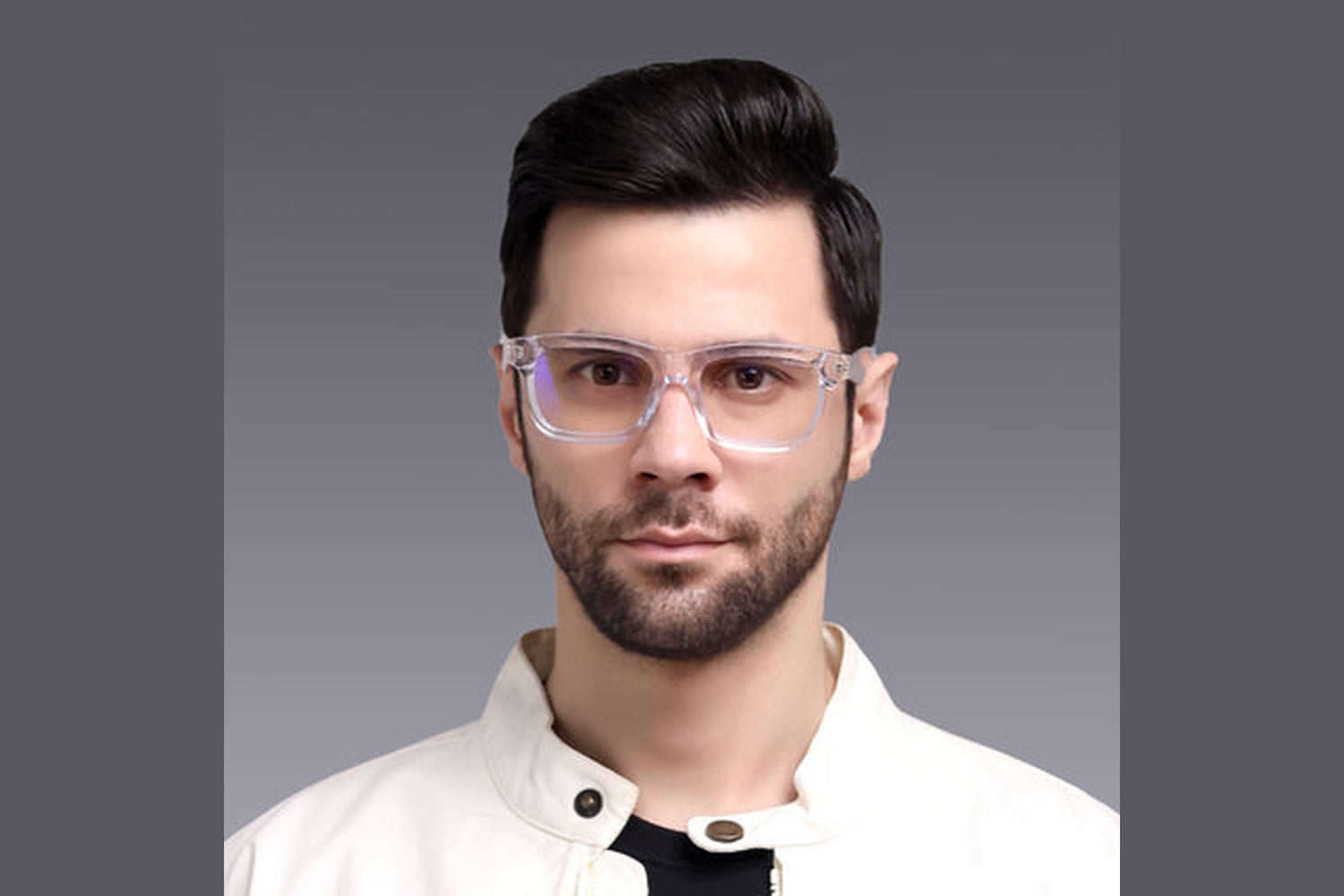
For working professionals, eyewear is the most consistently visible thing you wear — present on every video call and across every meeting-room table — so the quality of your frames quietly signals your taste and judgement; the smart move is top-grade materials that read as refined and considered, without paying for a designer logo.
Think about how often your glasses are actually seen. Not your watch, which is mostly under a cuff. Not your shoes, which spend the day under a desk. Your eyewear sits at the centre of your face for every conversation, every presentation, every video call — the one accessory that is always in frame. And yet most professionals put more thought into a watch they glance at than the frames everyone else looks at all day.
That's worth reconsidering — not out of vanity, but because eyewear is a genuine professional signal, and getting it right doesn't require overpaying.
Frames sit in the same space as your expression. When they're well-made and well-chosen, they read as someone with an eye for quality and the judgement to choose well. When they're cheap — discoloured edges, a hinge that's gone loose, a finish that's lost its sheen — that reads too, whether or not anyone says it. The signal isn't loudness. It's the quiet confidence of something clearly made well.
Crucially, that signal comes from how the frame is made, not whose name is on the arm. A visible logo announces what you paid. Top-grade materials, finished properly, announce taste — which is the more useful signal in a professional setting.
There is a clear, visible difference between ordinary frames and top-grade ones — and it isn't subtle once you know what you're looking at.
• Top-grade Italian acetate. This is the best grade of acetate in the business — not the ordinary acetate found in most branded frames. Cut from solid blocks and hand-finished, it carries depth of colour and a substance you can see and feel. These are not flimsy frames; quality acetate has a reassuring solidity to it, and that presence is exactly what reads as premium across a table.
• German high-precision hinges. The hinge is the part that moves every day and fails first on cheaper frames. High-precision German hinges hold their tension for years, so the frame still sits correctly and opens crisply long after a budget pair has gone slack — no embarrassing droop in year two.
• Handcrafted finishing. Hand-polishing and proper detailing are what separate a frame that looks considered from one that looks mass-produced. It's the difference a colleague can't name but can sense.
Here's the catch professionals run into: the obvious way to get top-grade eyewear is to buy a luxury brand at ₹20,000–₹25,000 — but most of that price is brand royalty and retail markup, not better materials. You're paying a logo tax. Augussto exists to remove it: top-grade Italian acetate, German high-precision hinges and handcrafted finishing, sold directly with zero middlemen at about a third the price of traditional luxury brands — ₹5,990 for frame and lens together. Same calibre of signal, none of the logo tax.
The professional day isn't one setting. There's the screen you stare at for hours, the boardroom where you want to look composed, and the commute or client lunch outdoors. The practical approach is frames that carry across all of it: a refined optical pair that doubles for screen work, and a considered pair of sunglasses for everything outside the office. Both should be built to the same standard, because the signal is only as good as the worse of your two pairs.
And because top-grade frames are made to last - and backed by a lifetime warranty - buying well once costs less over time than replacing cheap frames every year.
Well-made frames in classic shapes, finished in top-grade materials, read as the most professional — they signal taste and judgement without shouting. The make and finish of the frame matter far more than a visible designer logo.
No. The professional signal comes from top-grade materials and proper finishing, not the price tag or brand name. Direct-to-consumer brands like Augussto offer top-grade Italian acetate and German high-precision hinges for ₹5,990, about a third the price of luxury brands.
Top-grade Italian acetate (substantial, deep in colour, well-finished), German high-precision hinges that hold tension over years, a price that includes lenses, and a direct-to-consumer model that avoids the logo tax. Classic shapes that suit your face complete the picture.
Top-grade acetate frames have a solid, substantial quality to them rather than feeling flimsy — that presence is part of what reads as premium. A correctly fitted frame is comfortable for all-day wear because the fit is balanced, not because it's thin.